Applying Project Management Principles in Developing the SafeTrakX Safety Application
- SafeTrakX
- Project Management
- PMBOK
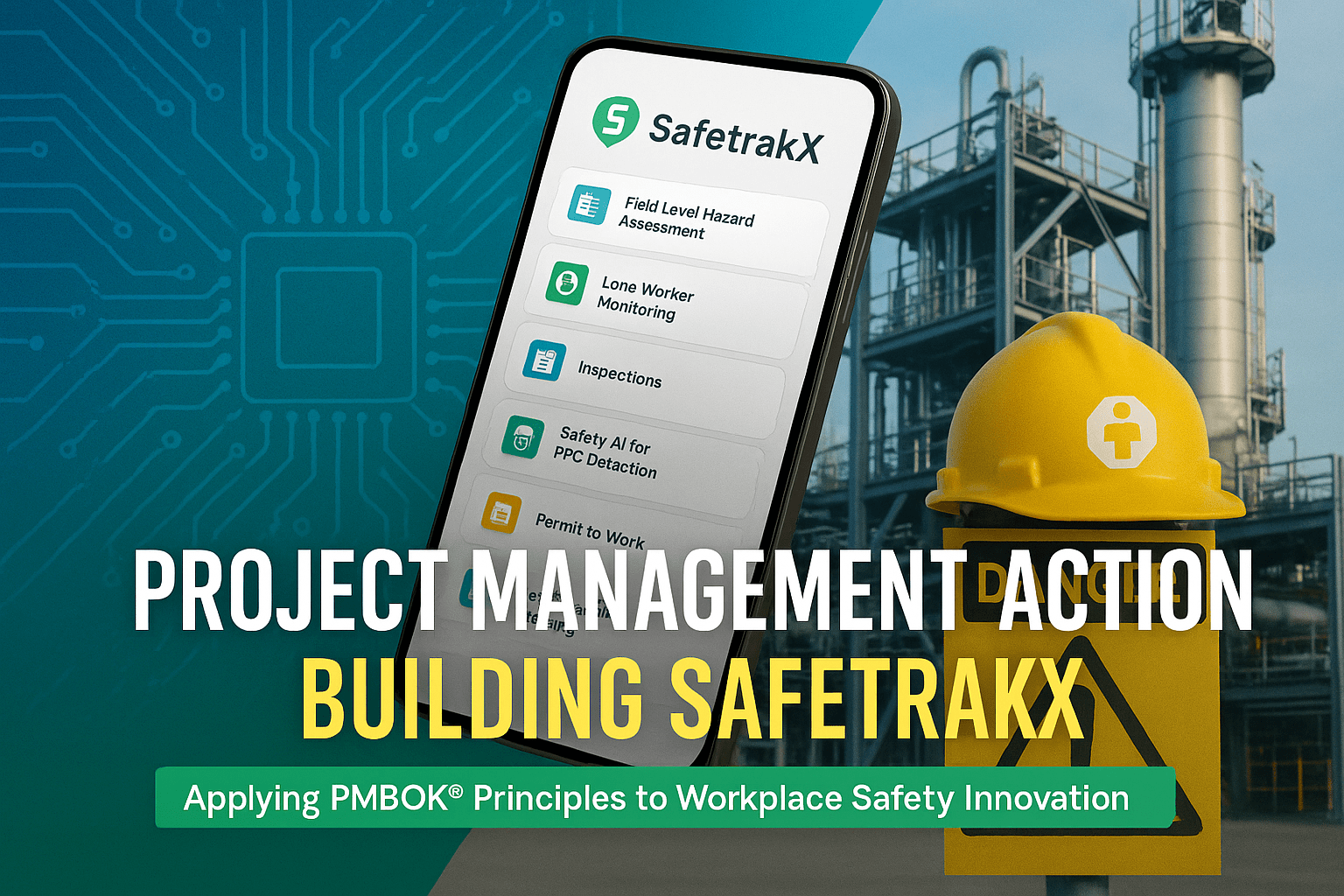
In today's fast-paced industrial environment, safety is not just a compliance requirement—it's a strategic imperative. As a Process Safety Specialist and PMP-certified professional, I set out to bridge the gap between modern mobile technology and workplace safety management through SafeTrakX.
SafeTrakX integrates multiple safety modules into a single platform: Field Level Hazard Assessment (FLHA), Lone Worker Monitoring, Inspections, Safety AI for PPE Detection, Permit to Work Management, and Event/Drill Tracking. While the technical work mattered, it was core project management principles that guided the project.
1. Initiating
A clear project charter outlined the vision:
"Create an all-in-one safety application that enhances hazard awareness, streamlines safety workflows, and supports real-time decision-making."
Stakeholders included plant safety officers, frontline workers, IT developers, and management—aligned with Alberta OHS regulations.
2. Planning
Using PMI's Planning Process Group: a Work Breakdown Structure (each module a subproject), a Schedule Management Plan (Agile sprints prioritizing FLHA and Lone Worker), and a Risk Register (adoption, integration, data privacy). KPIs included hazard-report completion rates and lone-worker alert response time.
3. Executing
An Agile hybrid: two-week sprints with defined user stories, regular stakeholder demos, and early FLHA user testing.
4. Monitoring and Controlling
Jira boards, burndown charts, and QA testing before closing each sprint. A formal Change Control Board prevented scope creep.
5. Closing
Each module closed with documentation, end-user training, and lessons-learned workshops—now informing the next phase, expanding AI for real-time PPE compliance.
Reflection
Structured project management isn't just for large infrastructure—it's equally critical in technology innovation. Applying PMBOK® principles, we delivered modules on schedule, managed risk proactively, and maintained stakeholder trust—delivering not just an application, but a safer, more efficient workplace.