Practicing Risk Management with SafeTrakX: Turning Field Hazards into Predictable Outcomes
- SafeTrakX
- Risk Management
- FLHA
Why this matters
In high-hazard operations, risks are discovered in the field—but managed in systems. The gap between the two is where incidents happen. SafeTrakX closes that gap by operationalizing PMI Risk Management in the daily flow of work: at the job site (FLHA), at the permit board, during inspections, and in front of a live camera using on-device AI.
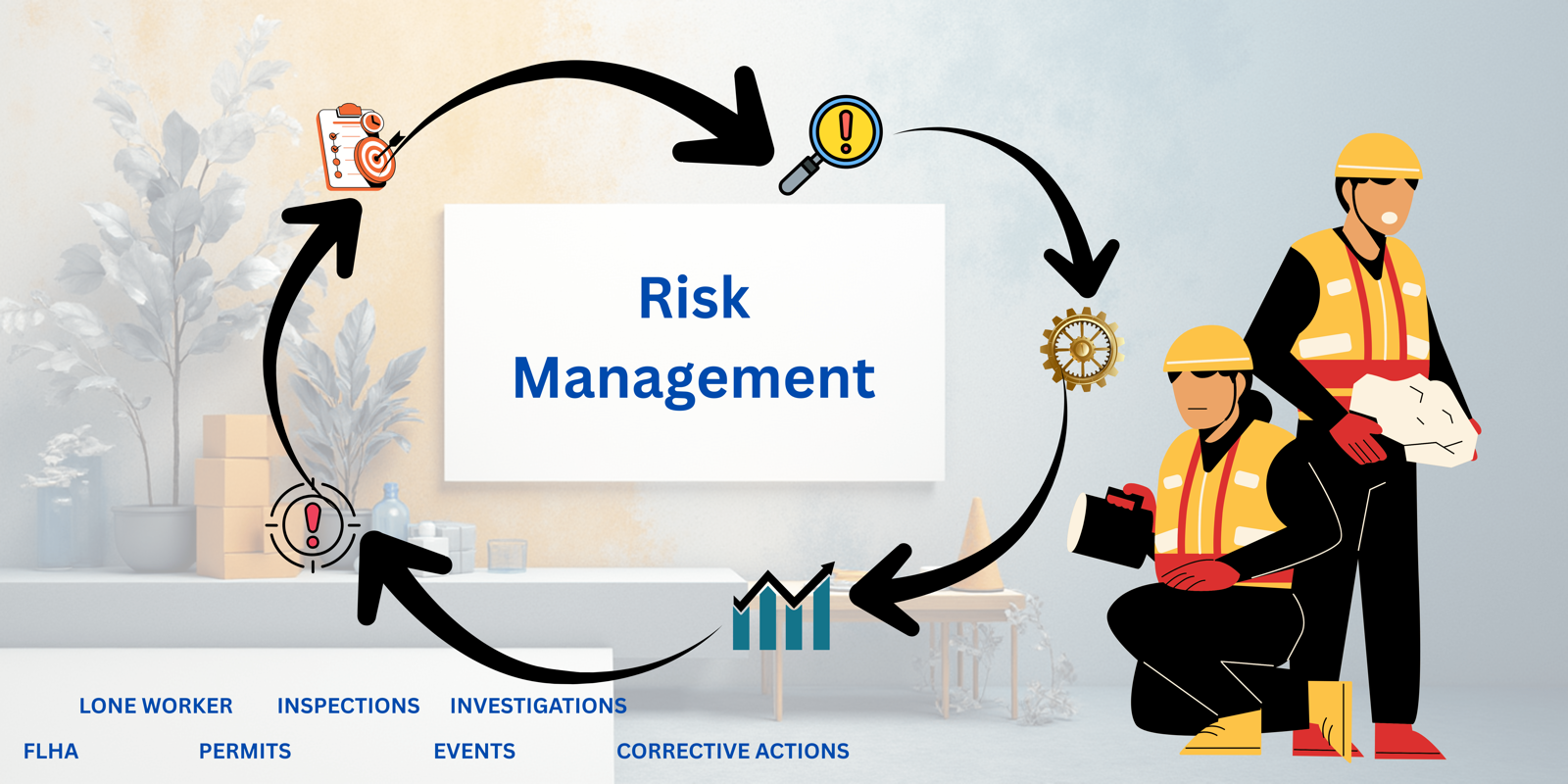
1) Plan Risk Management
Make it intentional, lightweight, and visible. Store your risk policy, 5×5 matrix, escalation thresholds, and notification rules in Admin → Settings so they're used everywhere. Every risk item gets a human-readable ID (e.g., HA: 1045, PERMIT-001). The workflow is the governance.
2) Identify Risks — catch it where it starts
FLHA lets workers select energy sources, then reveals tailored hazard prompts and controls. A curated "sticky-stuff that can kill you" list surfaces life-critical risks first. Optional on-device AI Vision flags missing PPE in real time. Inspections feed the same register so trends aren't siloed.
3) Analyze Risks — fast, consistent, defensible
Score Likelihood × Severity; high severity defaults to supervisor review and "Intolerable" locks next steps until controls are documented. Contextual controls are suggested per hazard type. Trend lenses filter by energy source, unit, contractor, or task.
4) Plan & implement responses
Control libraries (administrative, PPE, engineering) map to hazards. High-risk FLHAs trigger Permit-to-Work with enforced pre-conditions. ERP prompts confirm the nearest care facility. Closure requires photo/meter evidence—"Done" should be auditable.
5) Monitor Risks
A KPI panel tracks leading indicators (% FLHAs pre-task, critical controls verified, time-to-approval) and lagging ones (recordables, near misses, permit violations). Drift detection surfaces recurring issues that need a different control class.
Closing thought
Risk Management only works when it's easier to do the right thing than the old thing. SafeTrakX makes the right thing the default—so risk becomes predictable, visible, and steadily smaller.